
Field notes / US
Maintaining Folding Shower Seats in US Commercial Showers: Inspection and Records
A maintenance guide for folding shower seats in high-traffic US commercial showers: hinge and locking checks, surface condition, cleaning compatibility and service records.
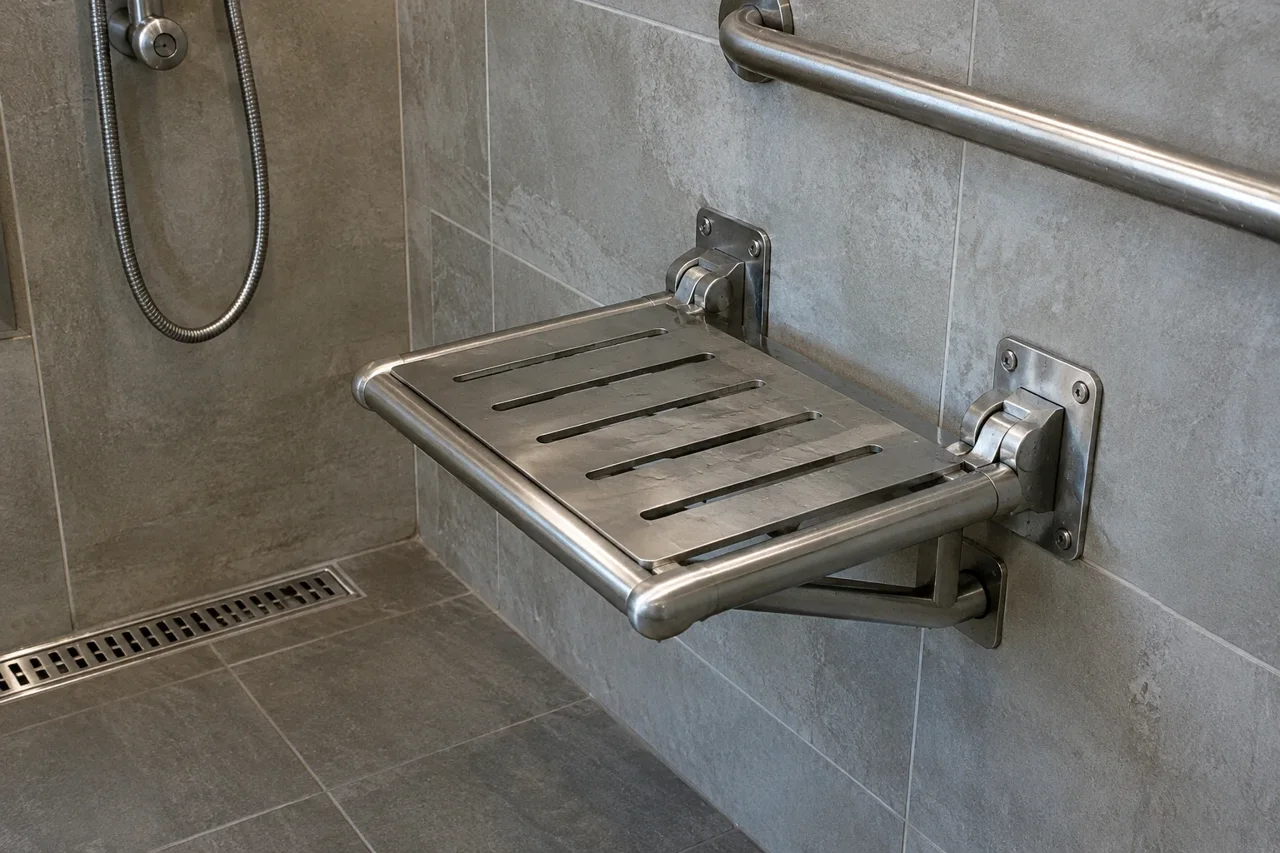
Folding shower seats in high-traffic US commercial showers need a scheduled inspection routine covering hinges, locking mechanisms, surface condition and cleaning compatibility, with every check logged against the manufacturer's documentation. This article sets out what a facility team should inspect, what to record and when to involve the manufacturer, for buildings in the United States.
Where Seats Sit in the ADA Framework
The 2010 ADA Standards for Accessible Design, published by the US Department of Justice and available in combined text from the US Access Board, address seats in Section 610 and grab bars in Section 609. Section 610 covers seats themselves; it is not the grab-bar requirements section. When documenting a shower compartment with a folding seat, cite the correct section for each element: seat provisions under 610 and any adjacent grab bars under 609, including structural requirements such as the 250 pound (1112 N) force assessment of the bar, fasteners, mounting and supporting structure in Section 609.8. The full standards text is at https://www.access-board.gov/ada/.
Keeping these references separate matters during audits and re-submittals. An inspector reviewing a shower seat will look at different provisions than one reviewing a rail, and a submittal file that conflates the two invites questions.
Hinge and Locking Checks
The hinge and locking mechanism are the moving parts most exposed to wear in a busy facility. A folding seat that does not lock positively in the deployed position, or that sags or drifts, should be taken out of service until reviewed. Build these checks into the routine:
- Cycle the seat through fold-down and fold-up and confirm it moves smoothly without binding or free play.
- Confirm the seat locks reliably in the deployed position and releases as intended.
- Check fixings at the hinge plates and wall brackets for looseness, corrosion or signs of movement.
- Look for deformation, cracked welds or unusual noise during operation.
Any structural concerns, including wall condition or fixing integrity, should be referred to the project designer and a qualified installer. Do not attempt structural repairs as routine maintenance.
Surface Condition and Cleaning Compatibility
Seat surfaces in commercial showers see constant moisture, detergent exposure and heavy use. Inspect for cracks, chips, delamination, lifting edges and discolouration, since surface damage can affect both hygiene and comfort. Check that drainage holes or channels, where present in the design, remain clear.
Cleaning products matter as much as cleaning frequency. Match the cleaning regime to the manufacturer's care instructions: some disinfectants and acidic cleaners can degrade certain plastics, coatings and gaskets over time. Keep the manufacturer's cleaning compatibility guidance with the maintenance schedule so cleaning staff and contract cleaners work from the same document. If the facility changes its cleaning chemicals, re-check compatibility before rollout.
Building the Service Record
A service record turns individual inspections into an auditable history. For each seat, record:
- Location identifier, model and, where known, installation date.
- Inspection date, inspector and findings against each check above.
- Cleaning products in use and confirmation they match the manufacturer's guidance.
- Any parts replaced, with part references from the manufacturer documentation.
- Repairs carried out and by whom, separating routine servicing from structural work by a qualified installer.
Set inspection intervals according to traffic level and the manufacturer's recommended maintenance schedule. High-traffic showers typically justify more frequent checks than the minimum. The record should also note the source document for each requirement or recommendation, so future teams can trace decisions back to the official standards at https://www.access-board.gov/ada/ or to the specific manufacturer literature.
Working With Manufacturer Documentation
The manufacturer's documentation is the reference point for hinge types, locking mechanisms, approved cleaning agents, spare parts and service intervals. Requirements differ between seat models, so avoid assuming one schedule fits every seat in the building. If documentation is missing or unclear, request model-specific information from the supplier rather than generalising. Flanso can provide model-specific maintenance information on request via https://flanso.com/#contact.
When a seat cannot be returned to a safe, fully functional condition through routine servicing, plan replacement rather than continued repair, and route the replacement through the project designer so wall condition, fixings and coordination with adjacent grab bars are reviewed together.
Project Checklist
- Confirm each shower seat is documented under the correct ADA section, with seats addressed in Section 610 and grab bars in Section 609 (https://www.access-board.gov/ada/).
- Schedule hinge and locking checks at intervals matched to traffic and manufacturer guidance.
- Inspect seat surfaces for damage and confirm drainage features are clear.
- Verify all cleaning products against the manufacturer's cleaning compatibility documentation.
- Log every inspection, repair and part replacement with dates and references.
- Refer structural or installation decisions to the project designer and a qualified installer.
- Request model-specific maintenance documentation from the manufacturer where records are incomplete, via https://flanso.com/#contact.
- Keep official standards citations and manufacturer documents together in the submittal file for audits and re-submittals.