
Field notes / US
Cleaning and Care for Stainless Steel Grab Bars in High-Traffic US Commercial Washrooms: Maintenance Documentation to Request and How to Record Servicing
What manufacturer maintenance documentation to ask for when buying stainless steel grab bars for US commercial washrooms, and how facility teams should record cleaning and servicing schedules over the life of the installation.
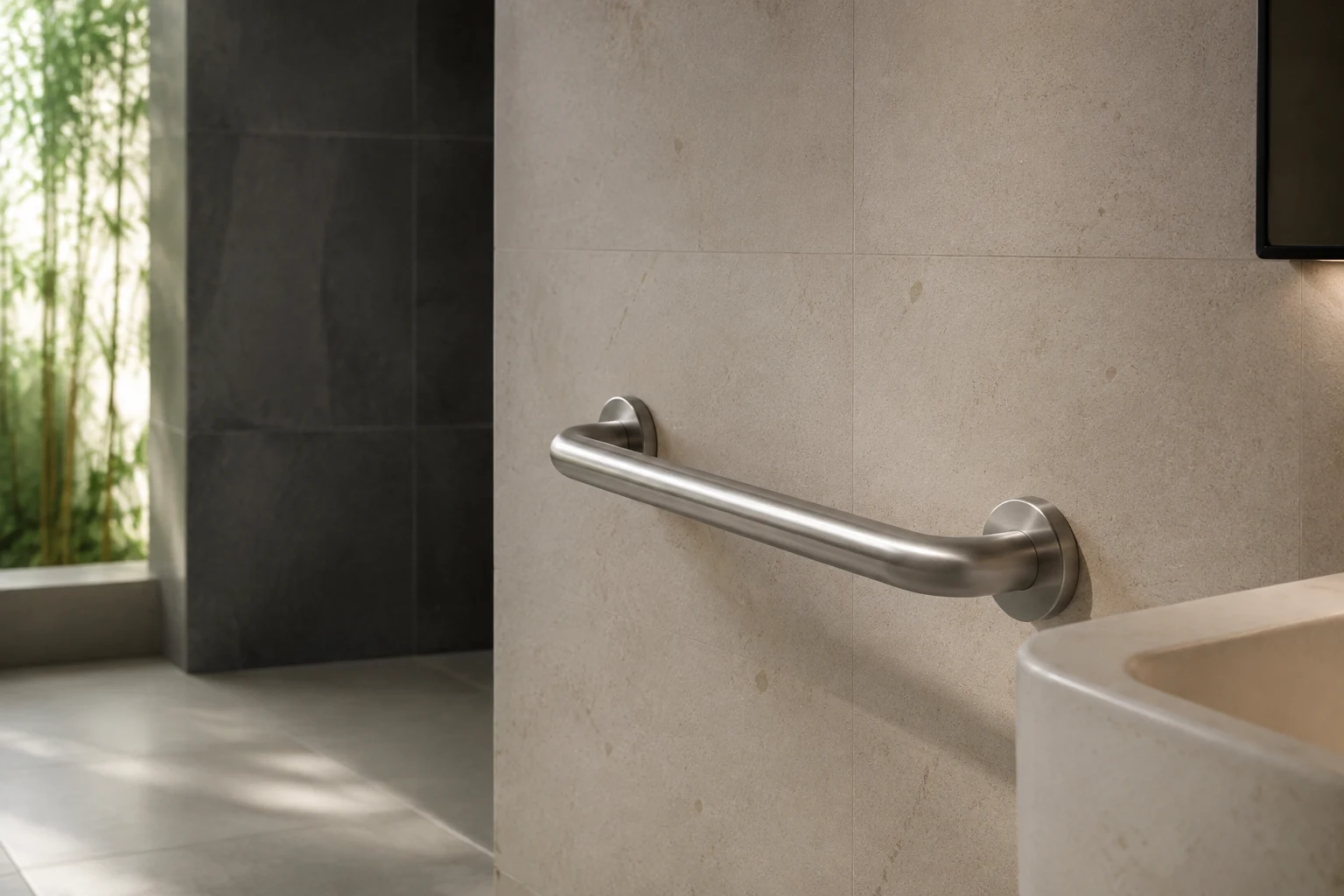
Stainless steel grab bars in high-traffic US commercial washrooms need a documented cleaning and care regime from day one, and that regime should be built on the manufacturer's maintenance documentation rather than improvised by cleaning staff. At purchase, request model-specific care instructions, approved cleaning agents and any inspection recommendations in writing, and fold them into your facility's servicing records so every rail has a traceable maintenance history.
This article covers US commercial washrooms. US requirements for accessible grab bars come from the 2010 ADA Standards issued by the US Department of Justice, with the official combined text published by the US Access Board. Section 609 addresses grab bars, while section 610 covers seats and is not a grab-bar requirement (https://www.access-board.gov/ada/).
Why cleaning and care documentation belongs in the purchase decision
In a busy commercial washroom, stainless steel rails are cleaned many times a day with whatever agents the janitorial programme uses. Harsh or incompatible chemicals, abrasive pads and chloride-bearing cleaners can damage the surface finish and, over time, affect the rail itself. A rail that looks serviceable may have a compromised finish long before anyone notices, and cleaning staff usually have no way to know which products are safe unless the manufacturer has said so.
Because of this, care information should be treated as part of the specification, not an afterthought. When comparing stainless steel grab bar options at tender, ask each supplier what maintenance documentation they provide for the exact model quoted. Generic advice is not enough; finishes, coatings and joints vary between products.
What to request from the manufacturer at purchase
Before ordering, ask the manufacturer or supplier for:
- Model-specific cleaning and care instructions for the specified stainless steel grade and finish
- A list of approved cleaning agents, and any agents or tools explicitly to be avoided
- Any recommended cleaning frequency for high-traffic environments
- Recommended periodic inspection points, such as fixings, joints and surface condition
- Guidance on what surface or structural conditions should trigger a report to the facility team
- Contact details for maintenance questions that arise after installation
Keep these documents with the project submittals so the facility team inherits them at handover. If a supplier cannot produce model-specific care documentation, treat that as a selection factor.
Note that care and cleaning documentation is separate from compliance evidence. The ADA Standards set requirements for grab bars themselves, including section 609.2.1 on outside diameter of circular bars and section 609.8, which assesses the bar, fasteners, mounting and supporting structure under a 250 pound (1112 N) force (https://www.access-board.gov/ada/). Those are standard requirements in the regulation, not evidence that any particular product has been tested, and a cleaning guide proves nothing about compliance. Ask suppliers for model-specific product information directly.
Translating documentation into a cleaning schedule
Once you have the manufacturer's instructions, convert them into a schedule your cleaning contractor can follow without interpretation:
- List each product model and finish, matched to the approved cleaning agents
- State who is responsible for routine cleaning and at what frequency
- State who carries out periodic inspections and how often
- Include the manufacturer's escalation guidance for reported damage or loose fittings
- Reference the original manufacturer document by name and revision so the schedule stays traceable
Where the manufacturer offers no frequency guidance for high-traffic settings, agree an inspection interval with the project designer and record who made that decision and why.
Recording servicing over the life of the installation
A rail's maintenance history is only useful if it is written down. For each rail, keep a record that includes:
- Location identifier, product model and finish
- Date of installation and installer or contractor involved
- Cleaning regime in force, with the agent used at each service
- Dates and results of periodic inspections
- Any reported issues, the response taken, and whether the rail was repaired or replaced
- The name and role of the person performing each entry
Paper logbooks work, but a digital asset record makes it easier to see patterns, such as a finish deteriorating faster in one room or a model needing repeat attention. Whichever format you use, make entries at the time of service rather than retrospectively.
When cleaning records inform replacement decisions
Over time, servicing records become part of the asset data for the whole washroom. If inspections repeatedly flag surface damage, loose fixings or finish failure on the same model or in the same location, those records give the project designer and qualified installer the evidence they need to assess whether repair is appropriate or replacement makes more sense. Any structural reassessment, including the wall construction and load path behind the rail, belongs with the project designer and a qualified installer, not with the cleaning team. Flanso's anchoring overview at https://flanso.com/#anchoring is a starting point for that conversation.
Project checklist
- Request model-specific cleaning and care instructions from each supplier before ordering
- Collect lists of approved and prohibited cleaning agents in writing
- Ask for any recommended inspection points and frequencies for high-traffic use
- Keep all maintenance documents with the project submittals at handover
- Convert instructions into a written cleaning and inspection schedule for contractors
- Assign named responsibility for routine cleaning and periodic inspections
- Record every service, inspection and issue against a location identifier
- Review records periodically and involve the project designer and qualified installer when replacement is indicated
- Request model-specific product information from Flanso via https://flanso.com/#contact
Good stainless steel grab bar care is mostly paperwork discipline: the right documents at purchase, a schedule the cleaning team can actually follow, and a servicing record that makes each rail's history visible. That record protects users, supports the facility team and gives specifiers solid evidence for future decisions.