
Field notes / UK
Toilet Grab Rail Maintenance and Inspection in England Washrooms
A facility manager's guide to checking fittings, surface condition and cleaning compatibility for toilet grab rails in high-traffic England washrooms, with record keeping advice.
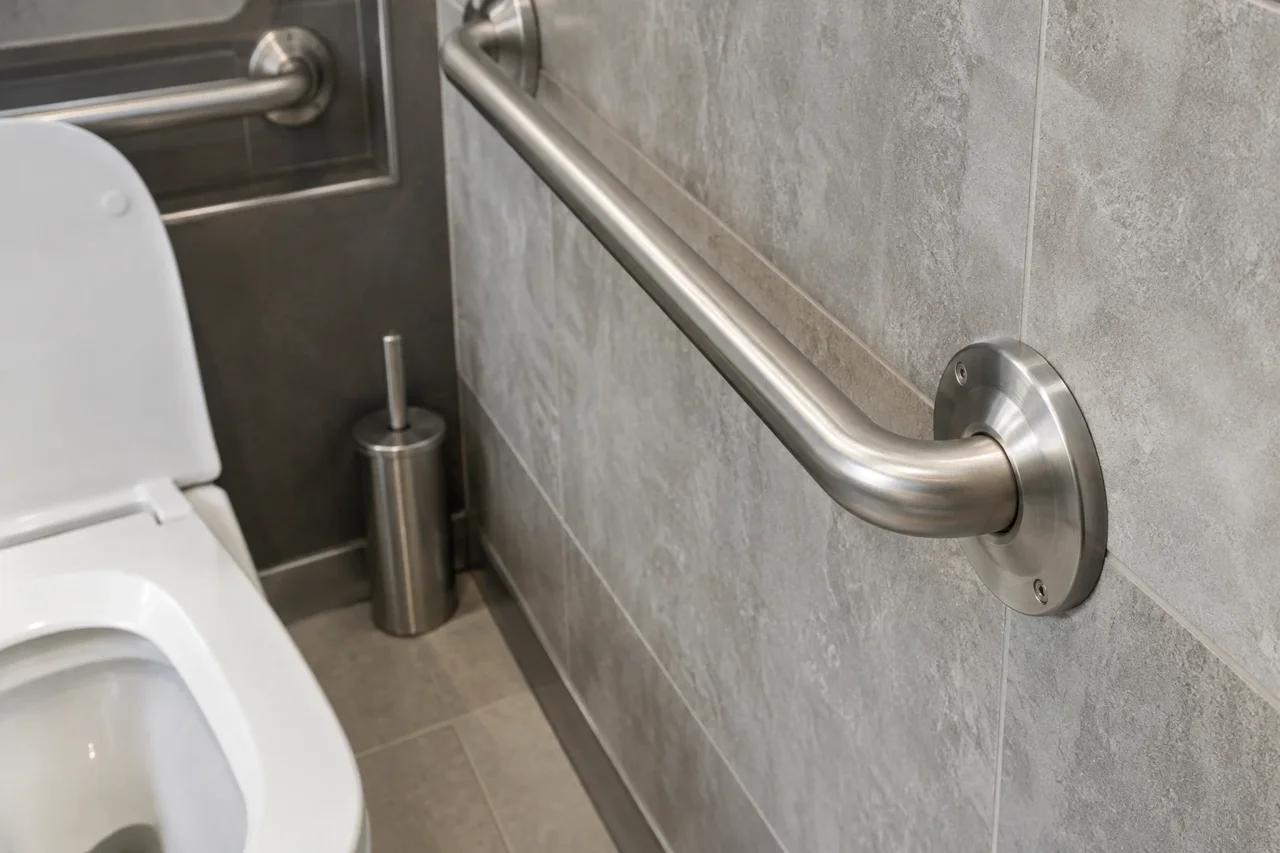
A toilet grab rail in a high-traffic England washroom should be checked on a scheduled basis for loose fittings, damage to the rail surface and its fixing points, and compatibility with the cleaning regime in use. The rail is a load-bearing support fixture, not a cosmetic fitting, so a small amount of unnoticed wear can remove its usefulness entirely. This guide covers what to inspect, how to record findings and which documentation to keep on file. Structural and installation decisions should always be referred to the project designer and a qualified installer.
Why maintenance records matter in England
In England, Approved Document M (Access to and use of buildings) is statutory guidance supporting the Building Regulations for building work. It is published in separate volumes covering dwellings and buildings other than dwellings. It applies to building work in England and is not a universal UK or international product certification. You can read the official publication at https://www.gov.uk/government/publications/access-to-and-use-of-buildings-approved-document-m.
For a facility manager, the practical point is this: the guidance informed the original design and installation of the toilet grab rail provision, but ongoing condition is managed through your maintenance regime. Keeping inspection and servicing records helps demonstrate that the installed provision is being cared for as specified, and matters when walls, fixtures or fittings change over the building's life. Approved Document M itself is not a certificate for any product, and holding a copy of the guidance does not mean a rail has been tested or certified. Ask the manufacturer for model-specific information.
What to check on fittings and fixings
The fixing points are where most rail failures begin, particularly where a fold-down or drop-down arrangement is installed or where the rail sees heavy daily use. A visual and hand-check inspection should cover:
- Loose screws, bolts or cover plates at the wall interface
- Movement or rotation of the rail under hand pressure
- Fixings pulling away from the wall face, or cracked or crumbling substrate around the fitting
- Hinges and locking mechanisms on drop-down rails, checked for smooth operation and positive locking
- Any absence or damage to escutcheons or covers that conceal fixings
If a fitting cannot be brought back to a secure condition through routine adjustment, the rail should be removed from service and the repair or replacement assessed by a qualified installer. Never rely on a rail that moves at the wall.
Checking surface condition and grip
The rail surface affects grip, hygiene and user confidence. Inspect for:
- Dents, burrs or sharp edges, particularly at welds and end returns
- Wear or damage to any knurled, textured or coated grip section
- Corrosion or staining, especially around fixings and joints where moisture collects
- Coatings that have become shiny, slippery or flaking with age and cleaning
Surface damage on a grab rail is more than cosmetic: a compromised grip surface or a sharp edge is a hazard in its own right. Where damage is found, record its location and extent in your inspection log and seek manufacturer guidance on repair versus replacement.
Cleaning compatibility
High-traffic washrooms are cleaned frequently and often with aggressive agents. Before introducing any new cleaning product, confirm with the rail manufacturer that it is compatible with the rail's material and finish. Aggressive or abrasive cleaners can dull stainless finishes, degrade coated grips and attack fixings, which shortens the service life of the rail and can create grip or hygiene problems. Key points to confirm with the manufacturer:
- Approved cleaning agents and dilutions for the specific finish
- Any cleaning agents or methods to avoid
- Recommended cleaning frequency for high-traffic settings
- Care instructions to pass to your cleaning contractor
Keep the manufacturer's care instructions with your maintenance file so cleaning staff and contractors are working to the same specification.
Recording servicing using manufacturer documentation
Request the following documentation from the manufacturer for each rail model installed, and file it alongside your inspection records:
- Care and cleaning instructions for the specific material and finish
- Any manufacturer maintenance or inspection recommendations for the model
- Spare part information, so worn fittings can be matched correctly
- Model and batch identification details for each installed unit
Your servicing log should record, for each inspection: date, location or asset reference, inspector, findings (including any defects), actions taken, and whether the rail was returned to service or taken out of use. Consistent records make handover to a new facilities team straightforward and provide a clear history if a defect is reported.
When to involve the specifier or installer
Bring in the project designer or a qualified installer when:
- A rail is loose at the wall and the cause is not obvious from the fitting alone
- Wall condition, substrate or fixtures around the rail have changed
- A rail must be replaced and the arrangement or fixing method may differ from the original installation
- You are unsure whether a damaged rail can safely be repaired
These are not maintenance decisions to make from a checklist alone. The load path behind the wall and the suitability of the arrangement for the user group are matters for those with the relevant competence.
Project checklist
- Confirm the rail's material and finish, and obtain manufacturer cleaning and care instructions
- Schedule periodic inspections covering fittings, fixings, hinges and locking (where applicable) and surface condition
- Check cleaning agents in use against manufacturer compatibility guidance
- Log every inspection with date, location, inspector, findings and actions
- Remove any loose or damaged rail from service and refer repairs to a qualified installer
- Keep model and spare part documentation on file, and request model-specific information from the manufacturer where anything is unclear
For model-specific documentation requests or enquiries about rail options for your project, contact us at https://flanso.com/#contact. For background on the statutory guidance relevant to building work in England, see Approved Document M at https://www.gov.uk/government/publications/access-to-and-use-of-buildings-approved-document-m.